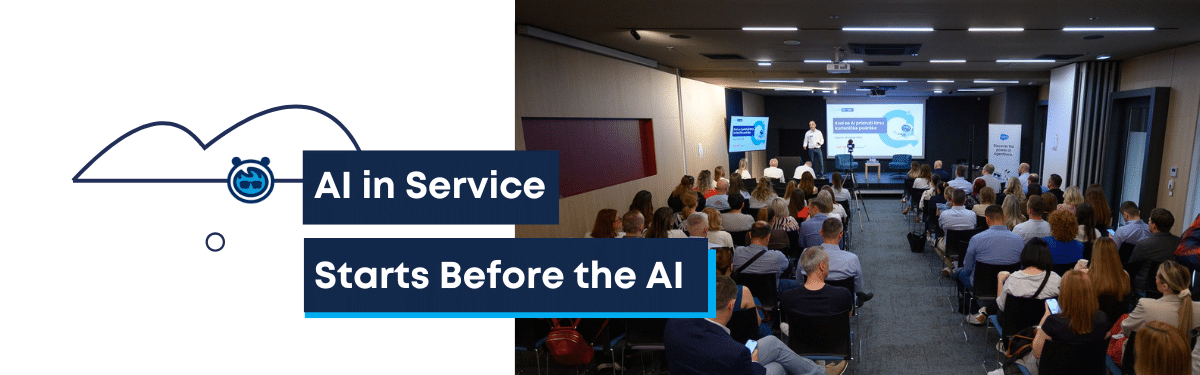
Everyone wants AI in customer service. But AI needs more than a seat at the table.
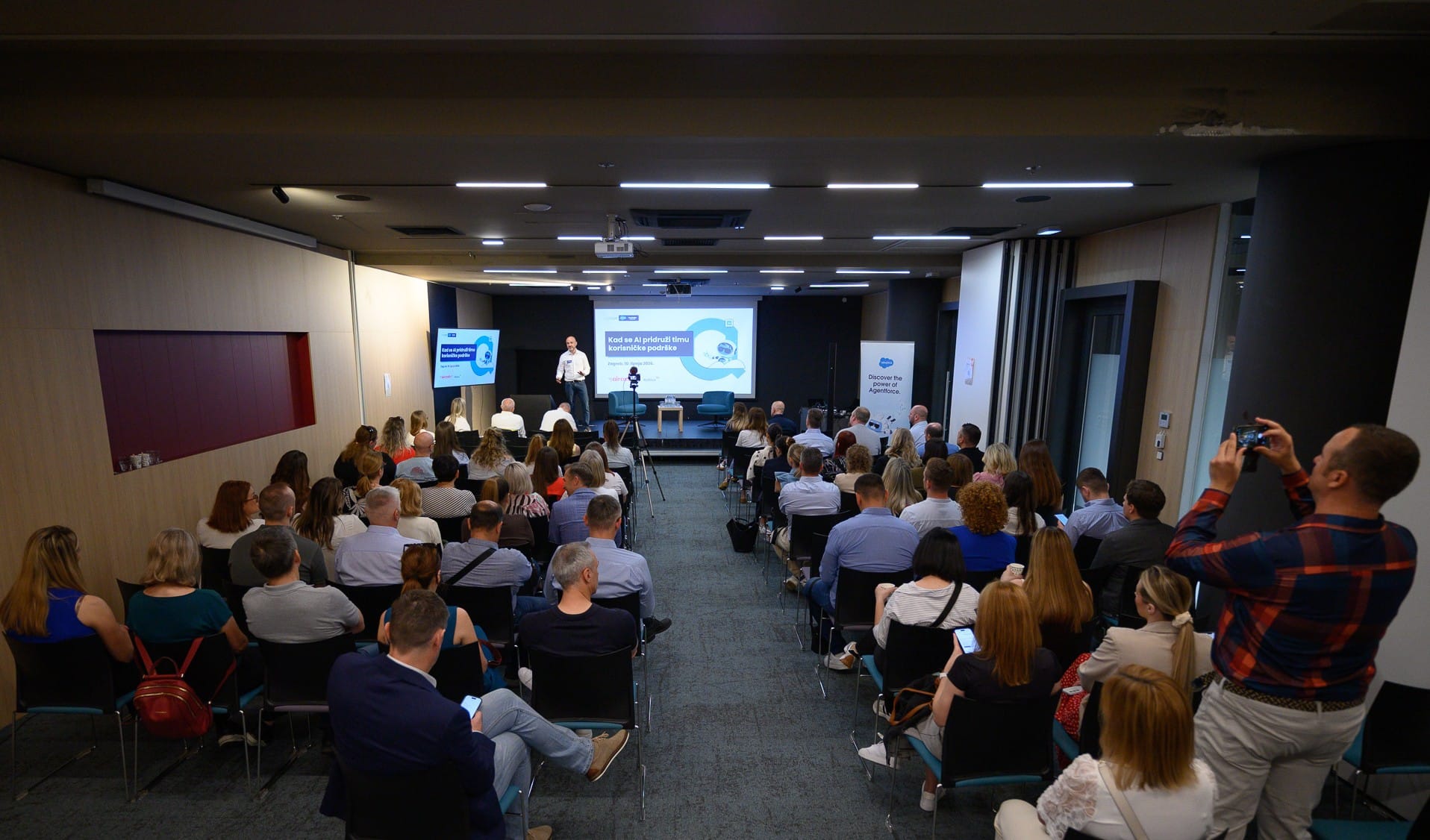
That is why we framed our “AI in Customer Service” event on 10 June in Zagreb around a very practical question: how do service teams bring AI into everyday work in a way that is useful, safe, and still human?
Across three sessions, we looked at the service roadmap, the Aircash implementation story, and the operational reality of running a modern contact centre in a fast-changing environment.
No magic tricks. No “AI will solve everything” promises.
Just real lessons from teams already testing, learning, and building.
Where does AI actually fit in real service work?
Matija Pavelić, Lecturer at the Contact Centre Academy by Radilica, opened the event with a clear overview of how AI is already entering contact centre operations.
Matija’s point was clear and practical: AI can support many parts of the contact centre, from routing, summaries, and knowledge search to agent assistance, quality analysis, reporting, and forecasting. But every use case has to earn its place.
The question is where AI creates enough value to justify the complexity behind it. That means clear processes, connected data, security, compliance, testing, and a business case that works outside the demo room.
As Matija showed through practical examples, some AI ideas look simple on paper, but become harder when they meet real customers, real regulation, and real costs.

One of his strongest messages:
“A human being may have never been so important in a contact centre.”
AI can take over repetitive work, prepare context, and help service teams move faster. But people still bring empathy, judgement, a sense of moral responsibility, and the ability to handle complex situations. The future of customer service is not AI instead of agents. It is AI and human agents working together.
The Aircash lesson: build the foundation before scaling AI
The second session moved from roadmap to reality.
Alan Sredić, Contact Centre Expert at Aircash, and Ivana Holjevac Brdar, Solution Consultant at Agilcon, showed what AI in customer service looks like when a fast-growing fintech starts building for scale.
Aircash operates across 17+ markets, supports users in multiple languages and handles rising interaction volumes from one central operation in Croatia. That creates a very practical service challenge: how do you keep quality, speed, and control when the number of customers, countries, products, languages, and requests keeps growing?
Aircash took a grounded route: build the foundation first, then add AI where it can create clear value.
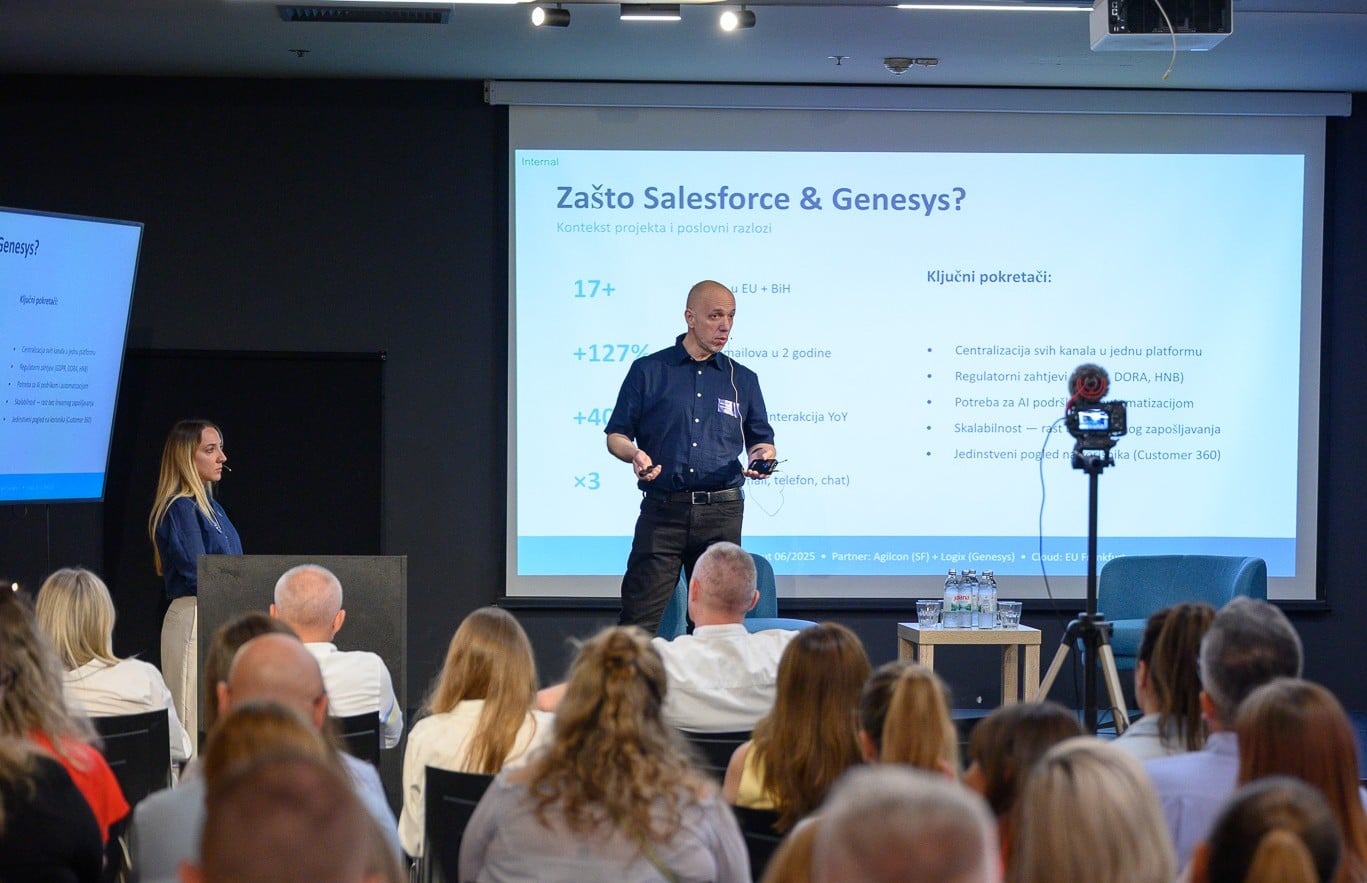
Together with the Agilcon team, Aircash built a connected service foundation on Salesforce Service Cloud, with an integrated telephony solution and their core system connected through API integration.
That foundation brought case management, complaint workflows, escalation flows, reporting, and security controls into one service setup. For Aircash, this was not just some technical detail. It was what made faster routing, safer translation, better reporting, and future AI use cases possible.
As Alan explained:
“We tried to start literally from the ground up and create a system that we would slowly build on.”
That step-by-step mindset was one of the strongest takeaways from the Aircash story.
Their first AI use cases are focused and practical: language detection for incoming emails, secure translation inside Salesforce, and AI categorisation to reduce manual administration and improve reporting.
Ivana then showed what happens behind the scenes when AI becomes part of the service workflow. For focused tasks such as translation, classification, and summarisation, AI can already deliver quick, practical value.
But Agentforce really stands out when service conversations become more complex: when AI needs to understand context, ask for missing information, or choose the next action.
In practice, this opens the door to advanced case classification based on previous cases, AI Q&A for agents using connected knowledge, and service agents that can handle routine requests with human handover when needed.
The practical mindset behind the implementation was clear: AI adoption works best when teams choose use cases carefully, test quality, protect data, and scale when the experience is ready.
Book a free consultation and see how we can help you reach your goals.

AI changes the team, not just the technology
The final session looked at what all of this means inside the contact centre.
Hrvoje Grubišić, Support Department Director at Aircash, shared the operational reality behind AI adoption in a fireside chat with Damirka Pongračić, CEO of Radilica.
One message stood out immediately: introducing AI quickly reveals how ready your service organisation really is.
It shows where your knowledge is stored. It shows whether your data is ready. It shows how connected your processes really are. And it shows whether your team is prepared for a different way of working.
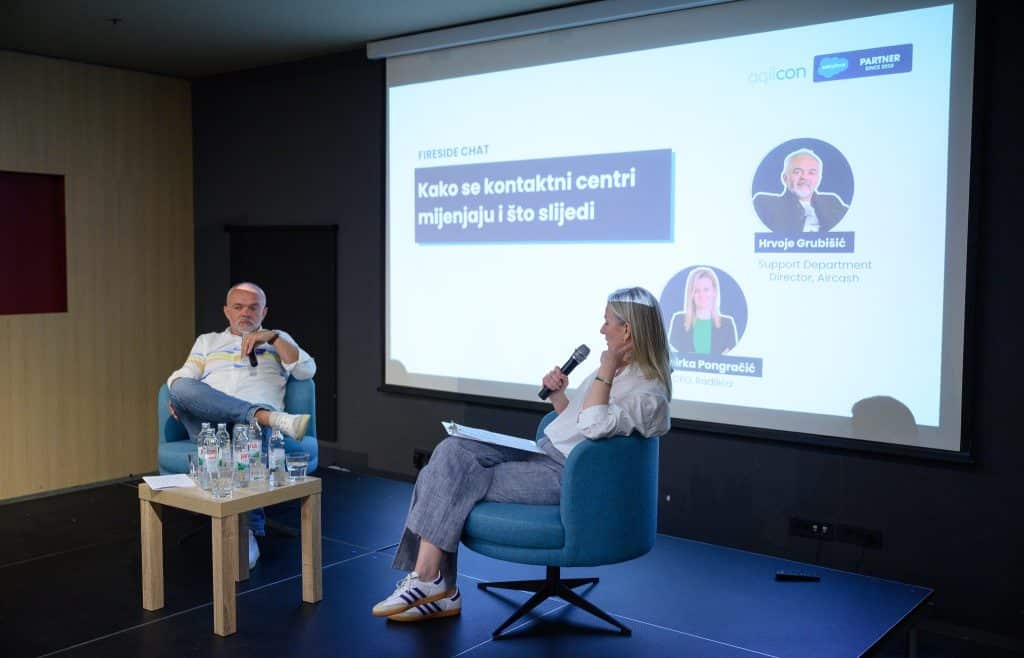
Hrvoje put it in a way many service leaders in the room could relate to:
“When you introduce this kind of technology, you quickly realise how much the system depends on the quality of your information.”
A lot of important service knowledge still lives in the heads of agents, seniors, supervisors, and team leaders, or across Word documents, Excel files, PDFs, links, and shared folders. AI needs that knowledge to become structured, reliable, and usable.
That puts human agents at the centre of the transformation.
They are the people who know what customers actually ask, where the exceptions are, which answers work, and where processes break down in real life.
As Hrvoje said:
“The most operational people are the ones who will actually give you the information you want from AI.”
AI is reshaping roles across the entire service operation.
As repetitive work becomes easier to automate, service teams need more specialisation, stronger quality control, better coaching, and more people who can handle complex situations. Human agents will remain central to service operations. But what makes a great agent will continue to evolve.
For managers, AI can move reporting closer to real-time operational visibility. Instead of waiting for Excel analysis, leaders can ask what happened overnight, which market saw a spike in interactions, and where the team needs to react.
For supervisors, AI can help with the quantity problem in quality management. It can highlight patterns, preselect conversations, and show where coaching is needed, so supervisors spend less time searching for signals and more time developing people.
The real AI advantage starts before the AI
The biggest takeaway from Zagreb was clear: AI in customer service only works when it is connected to the way service teams actually operate.
That means connected systems, reliable knowledge, clear processes, strong security, and people who are involved early enough to shape how AI will be used.
AI will not clean up disconnected service operations on its own. It will show where the gaps are.
And that is exactly why the teams that get the most value from AI will not be the ones chasing the loudest AI promise. They will be the ones that understand their service reality, prepare the foundations, and use AI where it can make everyday service faster, clearer, and more reliable.
Book a practical AI use-case assessment with our team. ⬇️
Contact us
"*" indicates required fields