Insurers today have more data, more digital channels, and more technology than ever before.
And yet many still struggle to serve customers consistently across the entire lifecycle. From marketing and distribution to underwriting, policy management, and claims.
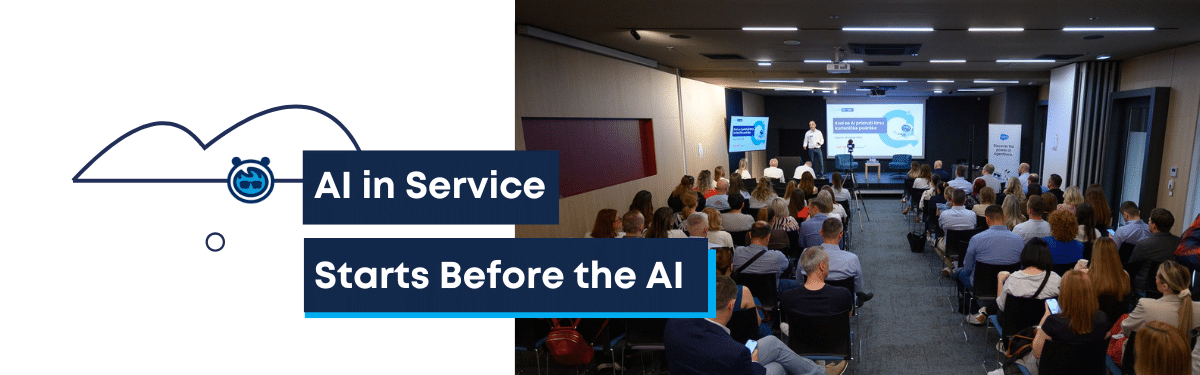
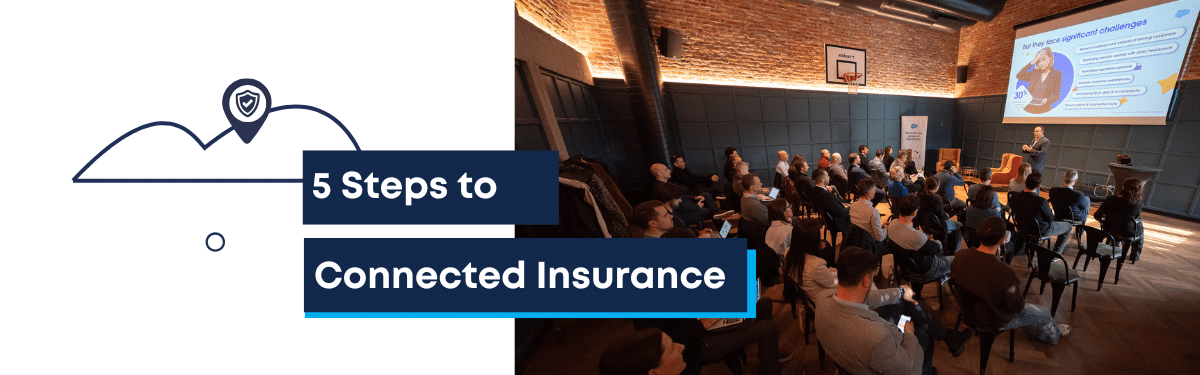
This was the starting point for our discussion, where we brought together insurance leaders from Zavarovalnica Vita and Atlas Insurance, together with Salesforce industry experts, to explore what it really takes to build connected insurance.
As Charif Arous, Insurance expert from Salesforce, highlighted:
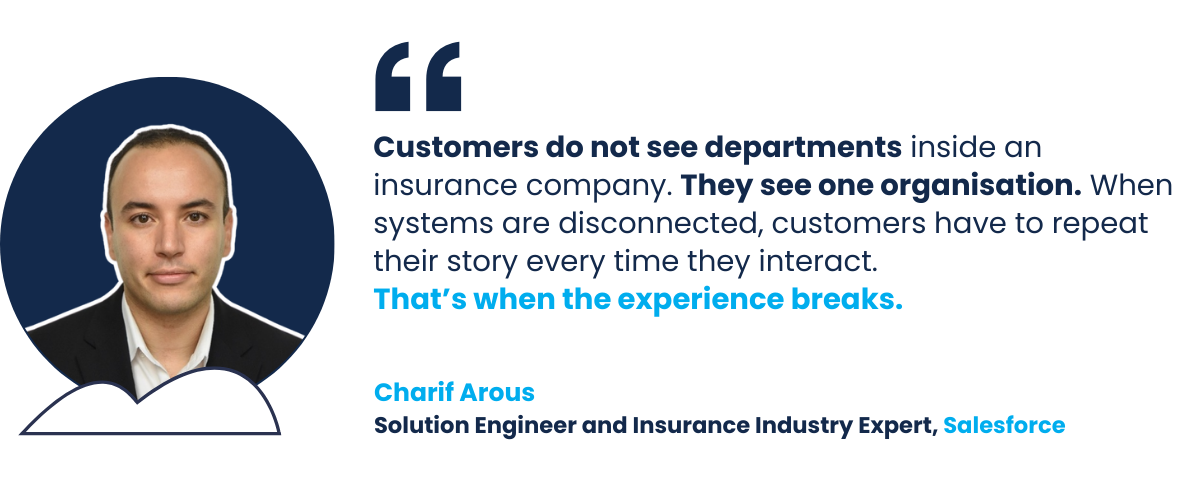
This is the gap insurers need to close. So where do you start?
1. Start by connecting the lifecycle
Insurance organisations still operate in silos. Marketing generates leads, sales manages distribution, underwriting assesses risk, operations manages policies, and claims teams resolve incidents.
Each function works. The experience does not.
The reason is most often structural. Most insurers built their technology landscape over decades, adding systems that were never designed to work together.
Connected insurance changes that by enabling information to flow across the lifecycle, turning fragmented interactions into a continuous customer journey.
👉 What to do: Identify where customer context is lost between teams and systems.
2. Make customer context visible across teams
Even when processes exist, the customer context is often missing. A customer calls about a claim. Different employee. Same story repeated again and again.
Not because people failed. Because systems do not share context.
When interaction history is not visible across teams, consistent service becomes impossible.
This is why creating a unified customer view is one of the highest-impact improvements insurers can make.
👉 What to do: Make customer interaction history visible across teams before redesigning processes.
3. Change how teams work, not just systems
Once lifecycle and data start to connect, the next constraint is how teams work.
Like many insurers, Atlas had accumulated systems over decades. Launching new products could take up to 24 months.
They changed both architecture and operating model.
Instead of handing requirements between teams, they moved to cross-functional product teams. Teams now design together, prototype early, and iterate quickly.
The result. Products are delivered in around two months, with the first solutions live in two to three months.
As Vinay Aarohi, CIO at Atlas Insurance, explained:
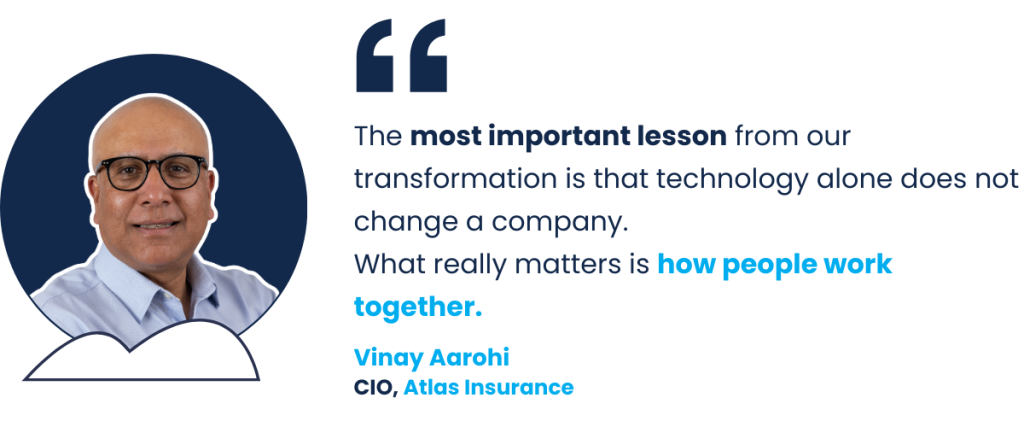
👉 What to do: Focus on how teams collaborate in practice, not just how processes are defined.
Book a free consultation and see how we can help you reach your goals.

4. Connect channels into one experience
With teams and data aligned, the next step is making the experience work in practice.
Zavarovalnica Vita shared a clear shift from fragmented communication to a connected customer experience.
Before, agents had limited visibility into past interactions.
Today, agents have full visibility into customer history, allowing them to continue conversations seamlessly across channels.
The impact is clear:
- 99% of calls answered immediately
- 84% of requests resolved within 8 hours
The real change did not come from adding new channels, but from connecting them.
Takeaway for marketing teams:
The most effective campaigns are often simple. The right message at the right moment.
Travel insurance when someone plans a trip. Onboarding after a policy purchase. Renewal reminders at the right time.
As Angela Sekuloska from Zavarovalnica Vita explained:
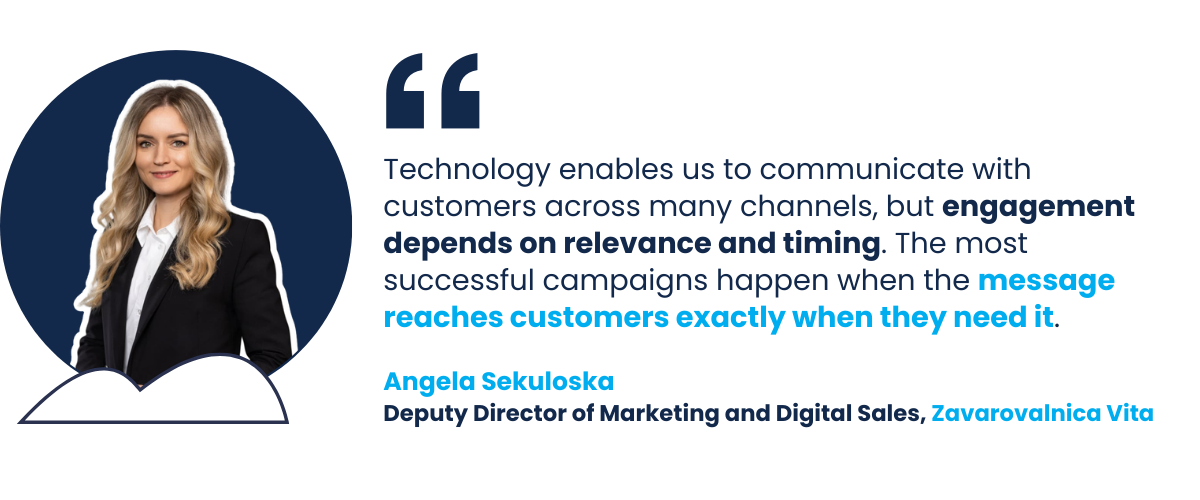
The real improvement came from connecting service, communication, and marketing into one customer view, turning disconnected interactions into a continuous journey.
👉 What to do: Focus on connecting channels and timing, not adding more of them.
5. Make it sustainable with data and adoption
Once everything is connected, the biggest risks shift to data quality and adoption.
Customer data is often scattered and inconsistent, with multiple versions of the same customer across systems. At the same time, new tools require teams to change how they work.
Without clean data and adoption, even the best setup will not deliver results.
 What to do: Treat data quality and change management as core parts of the transformation, not side activities.
Build the organisation around the customer
Insurers struggle because systems, teams, and processes were never designed to work together.
Connected insurance changes that.
It is a step-by-step shift. From connecting the lifecycle, to making customer context visible, to changing how teams work, and finally delivering a consistent customer experience.
Technology enables this journey.
Success depends on applying industry best practices and real insurance logic with a partner who understands how insurance works in practice.
That is what turns transformation from an initiative into a real, measurable impact across the organisation.
If this is something you are working on, we’re happy to share how others are approaching it in practice. 👇
Contact us
"*" indicates required fields