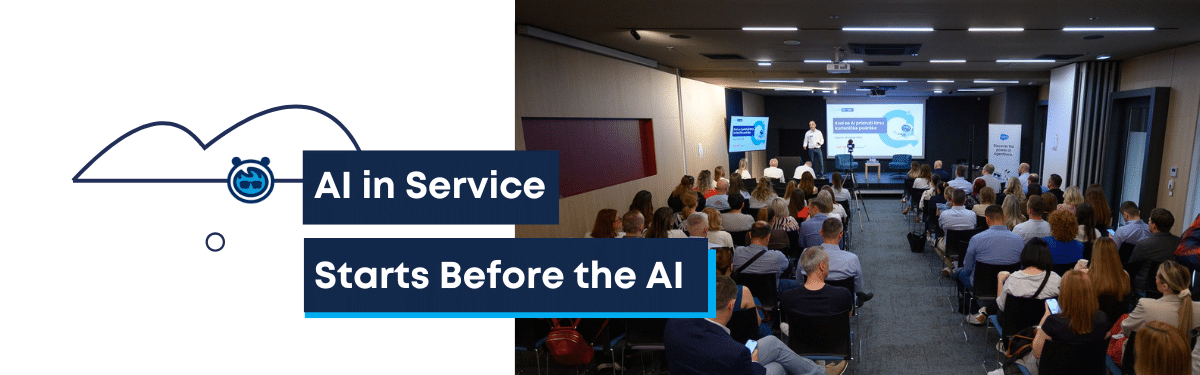
AI is already changing customer service, but not always in the way people hoped.
Many customers have the same frustrating experience: they open a chatbot, explain their problem, get a generic answer, repeat themselves, ask for a human, and then have to start the whole story again.
That is not real support. That is another layer of ping-pong.
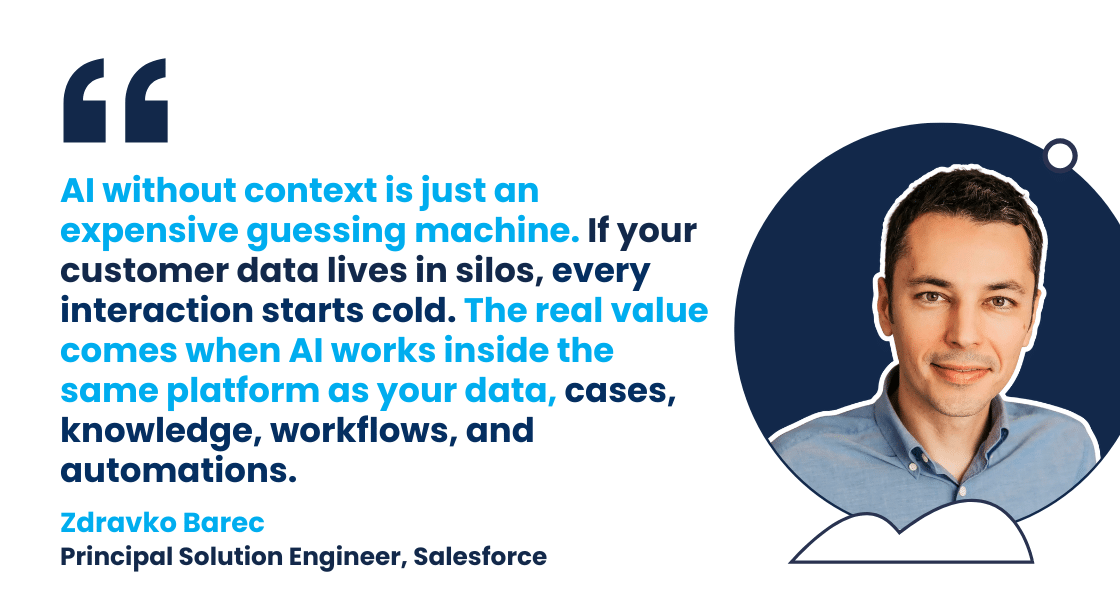
The real issue is not AI. It is fragmentation.
Voice, email, chat, CRM, knowledge and reporting often sit apart. Agents switch between screens, copy information manually, and lose time on work that should already be automated.
For customers, this means repeating the same story. For agents, it means starting from zero.
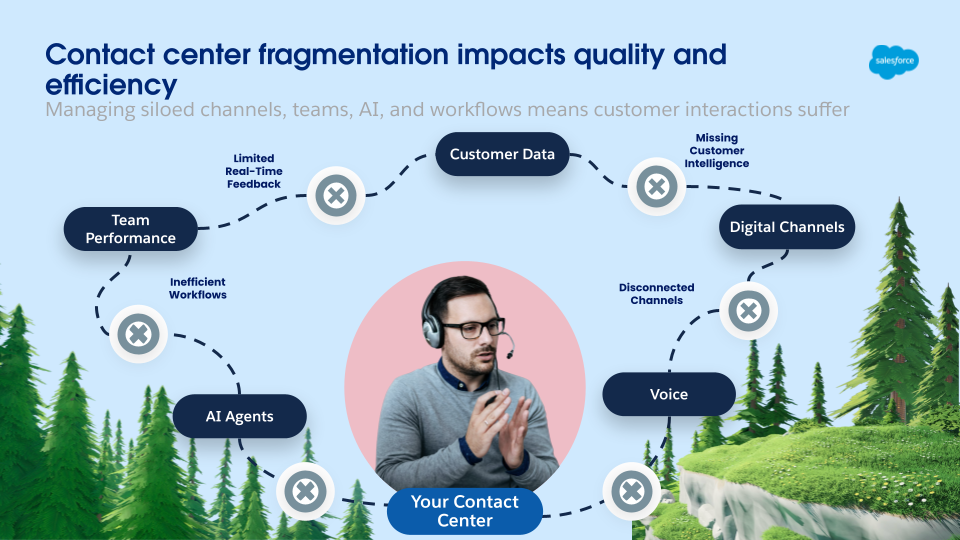
AI can help, but only as part of a connected service setup. It needs customer data, case history, knowledge articles, approved actions, workflows, and escalation rules. This is where Salesforce Agentforce shines: AI can work within the service process, with the context needed to reliably support customers and agents.
The best place to start is not the flashiest use case
When companies start talking about AI, the conversation often jumps straight to ambitious ideas: fully autonomous agents, complex self-service journeys, or AI that can solve everything.
But the most practical advice is much simpler: “Start with boring, expensive workflows.”
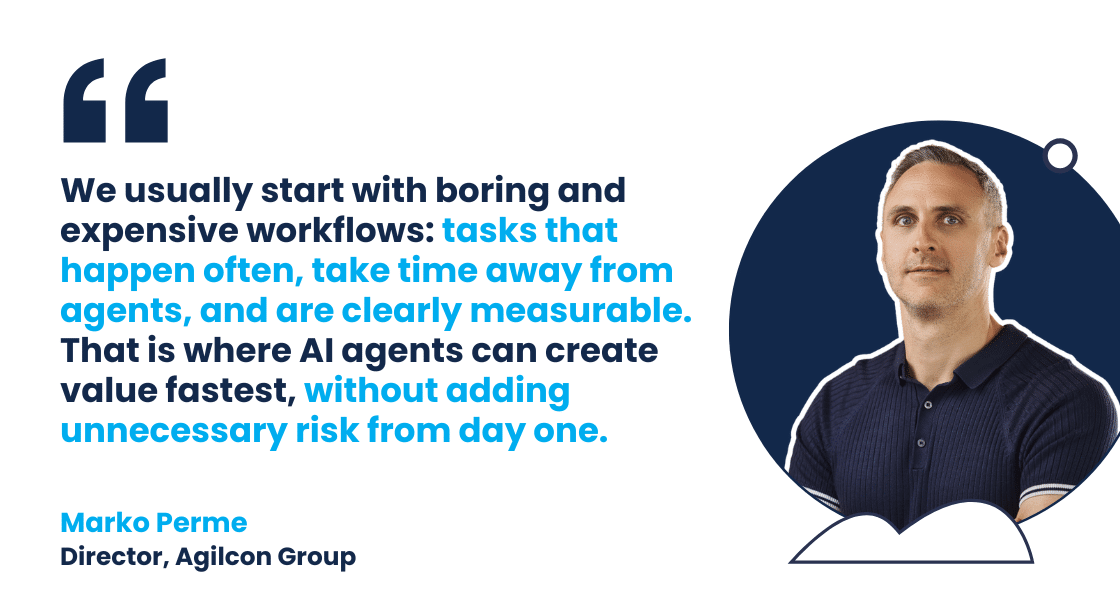
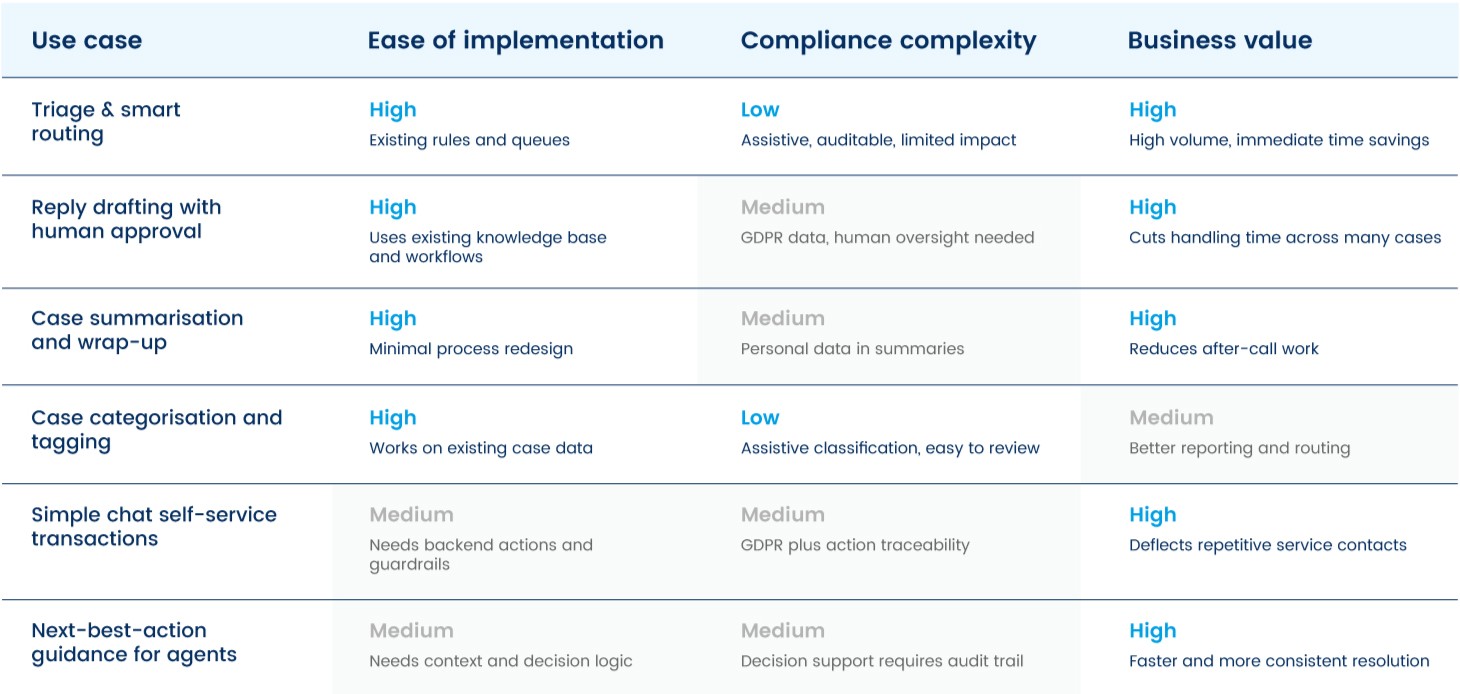
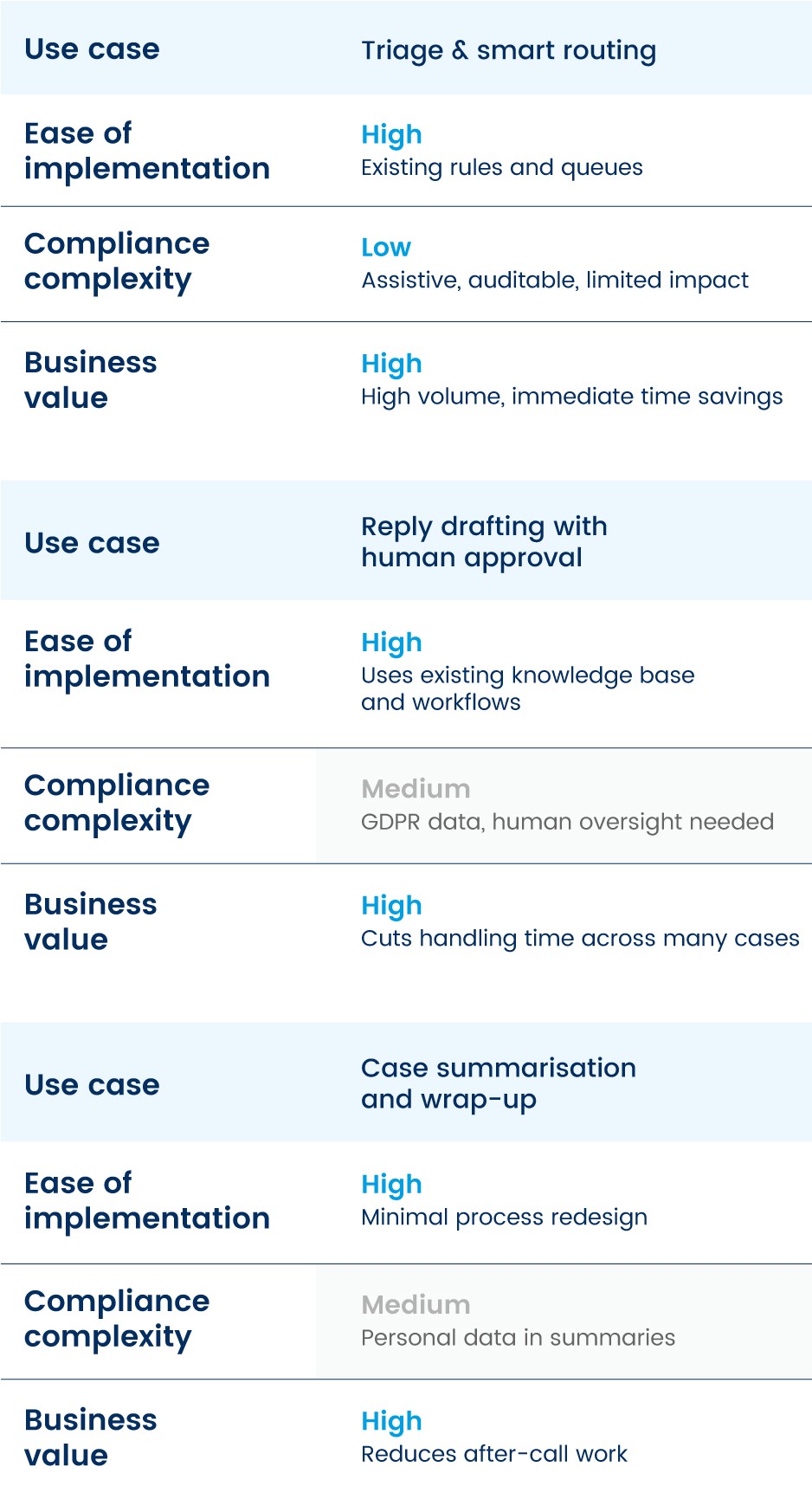
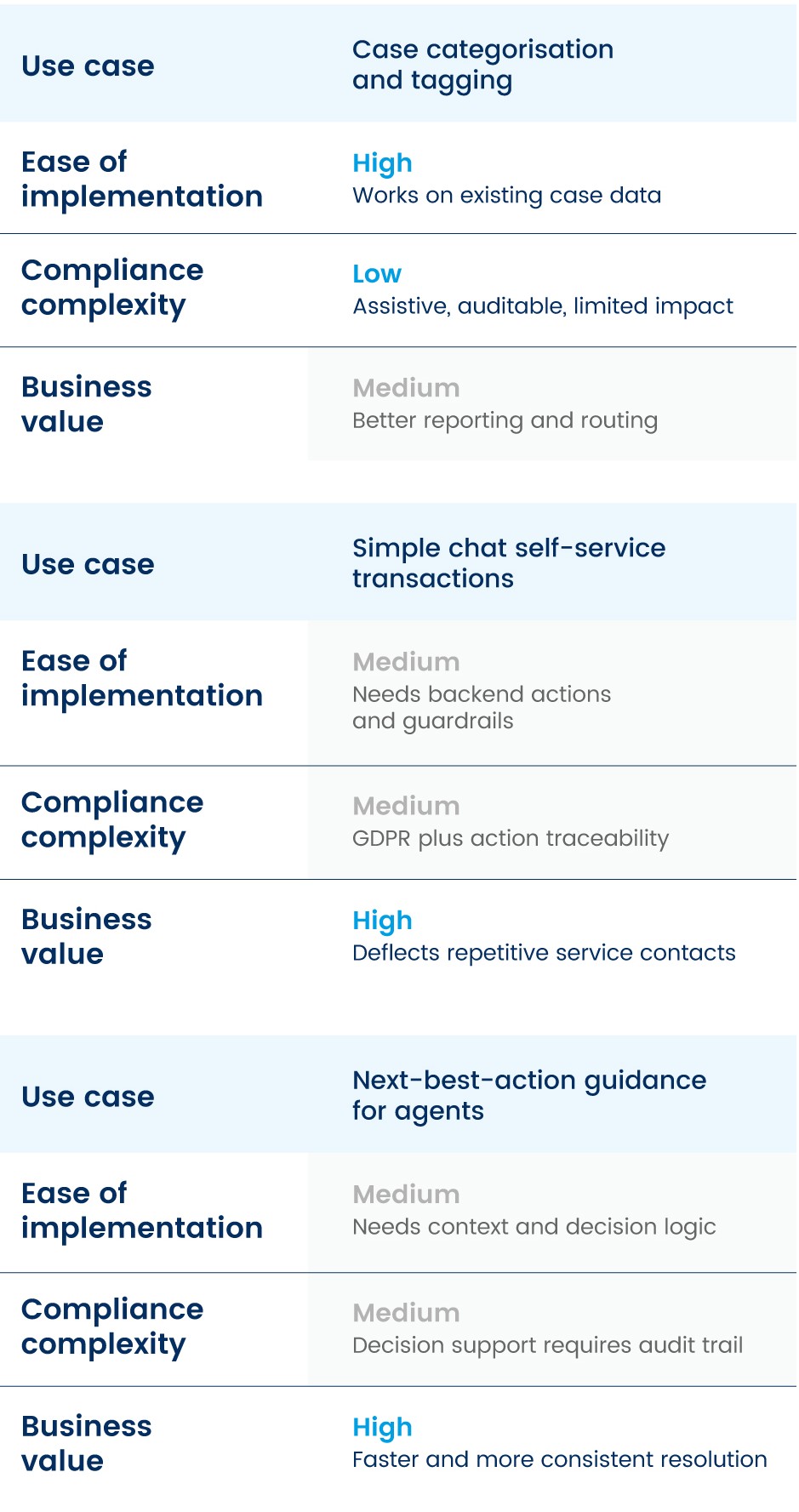
Think about routing cases, drafting replies, summarising conversations, creating wrap-up notes, tagging cases, or guiding agents toward the next best action.
None of these sounds futuristic. That is why they are good starting points.
Reliable AI needs more than a model
Reliability is one of the biggest concerns around AI in customer service, especially in regulated industries.
That concern is valid.
You cannot simply connect a language model to customer conversations and hope for the best. Customer-facing AI needs guardrails, governance, monitoring, data grounding, approved workflows, auditability, and clear rules for when a human needs to step in.
Reliable AI agents are built with process design. They need to know what they can say, what they can do, which data they can use, when they need approval, and where their responsibility ends.
“Reliable AI does not try to solve everything. It knows when to hand over.”
Book a free consultation and see how we can help you reach your goals.

What a good AI handover looks like
In the demo part of our webinar, we saw a customer start with an AI agent. When the situation became more complex, the interaction moved to a human agent.
The important part was what happened next: the agent did not start from zero. They received the previous conversation, customer context, an AI-generated summary, suggested replies, and recommended next steps.
That is where AI becomes useful: not as a wall, but as a support layer that keeps context intact and removes repetitive work.
Start small, but start properly
The companies that benefit most from AI agents are the ones that identify the right use cases, implement them safely, measure the value, and improve over time.
Before choosing your first AI use case, assess it through three simple lenses.
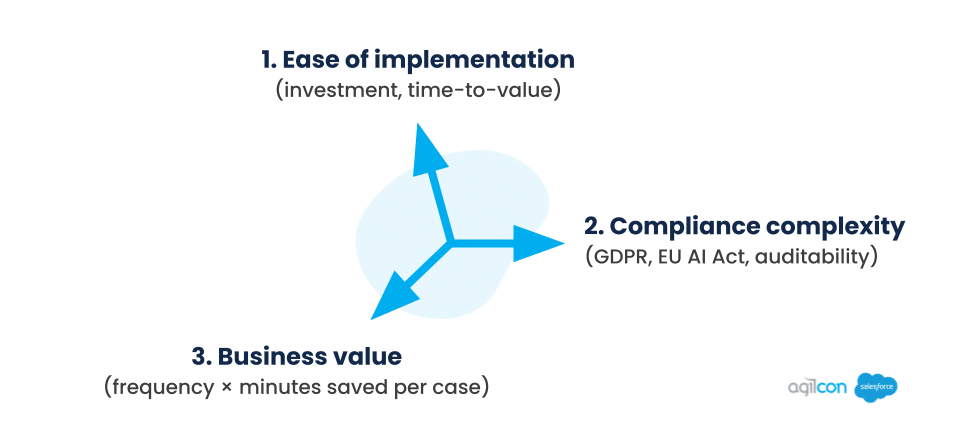
Choose the right first AI use case
A good first AI use case should answer three questions: How easy is it to implement? How complex is it from a compliance perspective? How much business value can it create?
Use this framework to identify which AI opportunities are realistic, valuable, and ready to move forward.
Ready to explore where AI agents could help your contact centre?
Watch the webinar recording to see the discussion and demo in context.
Want to move from ideas to action?
Book a practical AI use-case assessment with our team. ⬇️
We’ll help you look at your current service processes, identify where AI agents could create the clearest value, and define a realistic starting point with Salesforce Agentforce.
Contact us
"*" indicates required fields