Some organisations believe they’re too complex, too manual, or too set in their ways to transform how they work.
Or they might be all of the above and still begin charting their own path through digital transformation, just as Pošta Slovenije has.
A 500-year-old national postal service. Thousands of employees. Deeply ingrained processes. A public responsibility that leaves little room for failure.
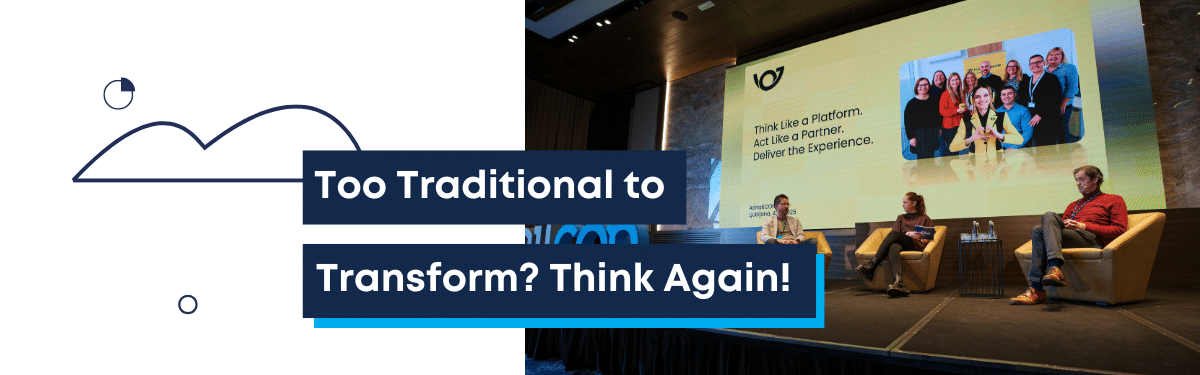
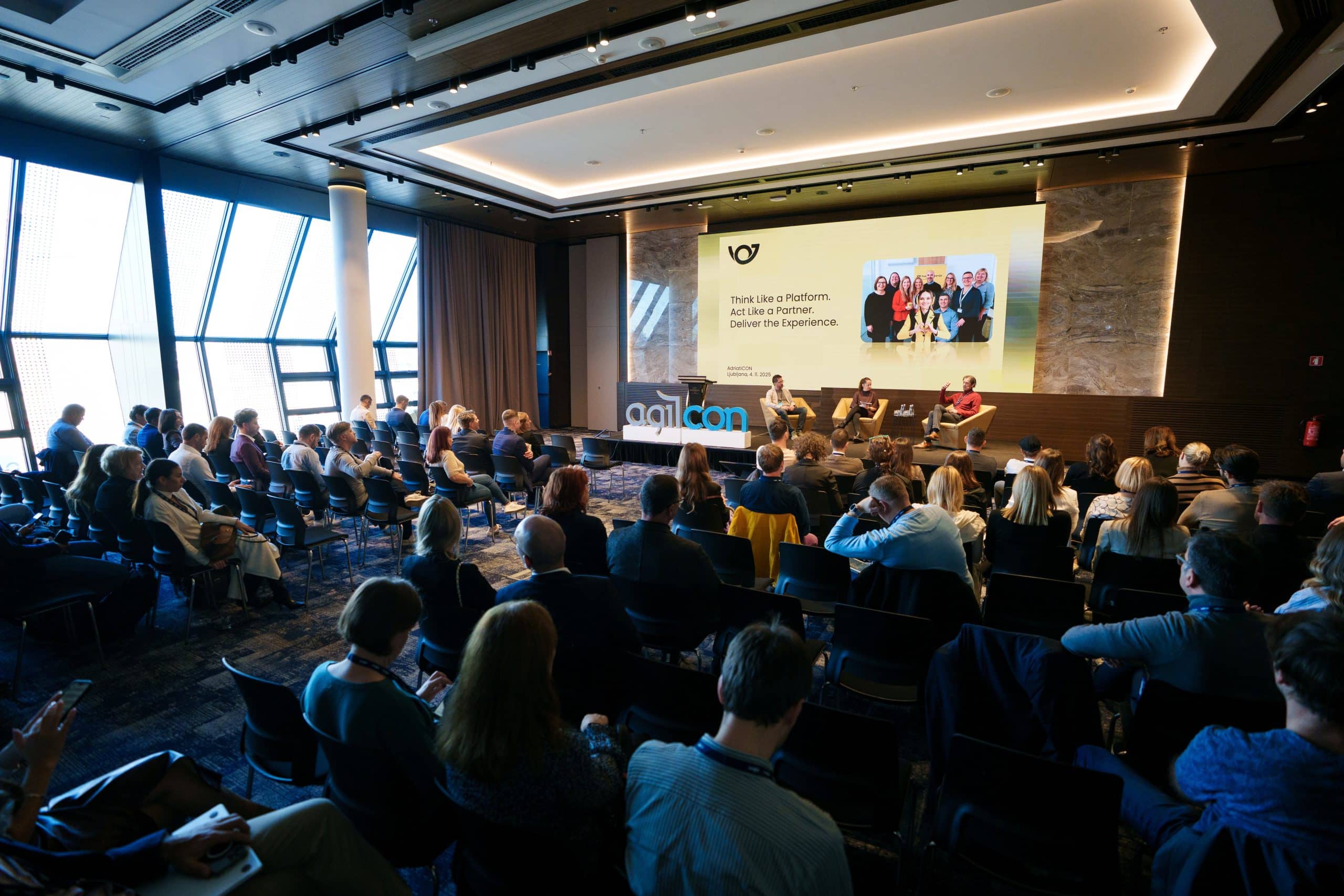
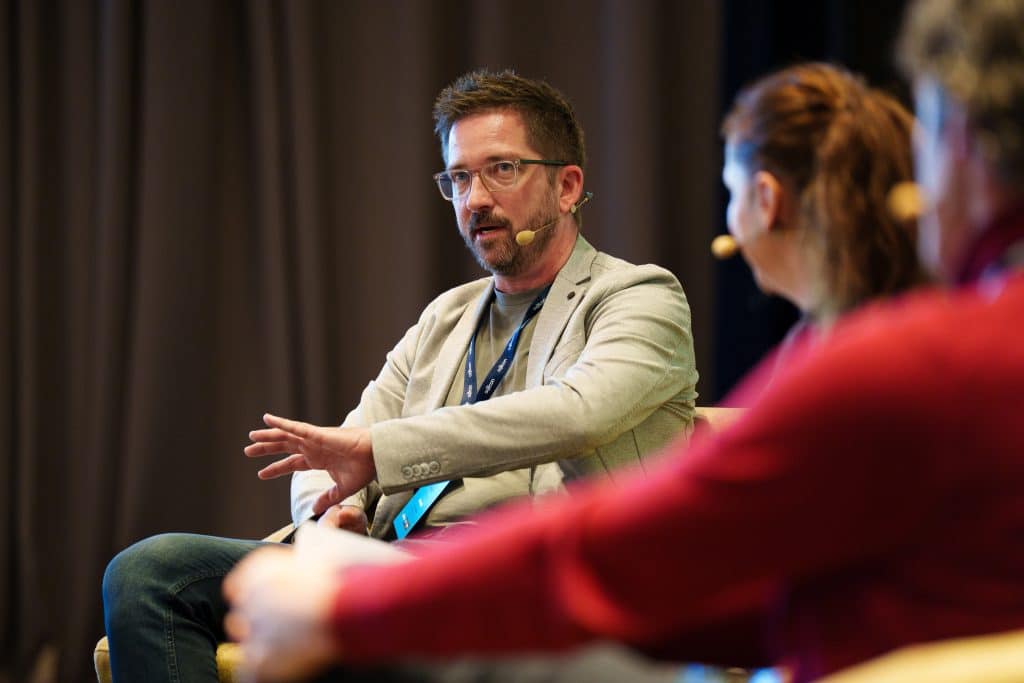
At AdriatiCON 2025, Slavko Ovčina (CIO) and Tadej Bokan (Project Manager), together with Nika Loparič (Head of Sales at Agilcon), discussed how Pošta Slovenije has started rethinking customer service, operations, and decision-making.
Not through a big-bang transformation, but through a deliberate, business-led redesign of processes.
This is not a story about a finished transformation. It’s a story about how it starts.
The Challenge: When Ideas Exist, but Progress Doesn’t
Innovation was never the missing piece.
As Slavko openly admitted, he was “very stunned how some people were very innovative, but those ideas didn’t go through.” Ideas emerged from the organisation, but without clear top-down alignment, they stalled.
At the same time, Pošta Slovenije was facing a familiar set of challenges:
- Processes were fragmented and slow to adapt.
- Customer data existed, but was scattered across systems.
- Customer service teams were overloaded with repetitive enquiries.
Rather than accepting these constraints, Pošta Slovenije started addressing them step by step.
The Shift: Processes Before Data, Business Before IT
“You cannot be data-driven if your processes are not digital and automated. Data is the result of good processes, not a shortcut around them.”
Slavko Ovčina, CIO, Pošta Slovenije
This reframing mattered, especially at the leadership level.
As Slavko stressed during the session, this is not an IT project. It is a business transformation that requires:
clear top-down support,
ownership of process change,
and a willingness to rethink how work actually gets done.
With leadership aligned, Pošta Slovenije adopted a platform mindset.
Together with Agilcon, they are setting up Salesforce as a core foundation for customer experience across sales, marketing, and service. At the same time, the organisation continues to build and evolve its own solutions, such as the Moja Pošta app and the AI voice assistant Pia.
Book a free consultation and see how we can help you reach your goals.

The Blueprint in Practice: Start Small, Learn Fast
So instead of trying to do everything at once, Pošta Slovenije is taking a pragmatic, step-by-step approach to transformation:
Rethinking and automating core processes.
Start consolidating customer data.
Introducing AI gradually, where it clearly adds value.
Pia, the AI voice assistant, is a good example.
She didn’t start as a complex, all-knowing agent. Instead, she focused on simple, high-volume questions: parcel tracking, delivery times, opening hours, and pricing.
Today, Pia handles around 70% of incoming calls, and no customer emails go unanswered. This allowed customer service teams to be reorganised around more complex, higher-value interactions.
Not a revolution, but a meaningful, measurable start.
The Human Reality: Change Is Learned, Not Announced
Technology wasn’t the hardest part.
As Tadej Bokan explained, many employees were used to ways of working that hadn’t changed in decades, and were now being asked to adapt.
Adoption didn’t come from presentations or mandates. It came from experience.
Step by step, teams see how automation is reducing administrative work, clarifying workflows, and improving how customer enquiries are handled. Resistance is softening, not because people are told to change, but because change starts to make sense in their daily work.
At the same time, Pošta Slovenije continues to build the foundations for a more unified and scalable customer experience, introducing further automation and AI capabilities where they create real value.
The Bigger Lesson
Age, scale, and tradition are not barriers to innovation. Misalignment is.
If a 500-year-old national postal service can rethink its processes, align its leadership, and start modernising at scale, the real question for every other organisation is simple:
What’s actually stopping you?
Contact us
"*" indicates required fields