If 2025 had a theme, it was this: AI didn’t fail us, our expectations did.
Leaders across industries walked into the year hoping for instant automation, plug-and-play transformation, and “look-what-it-can-do” moments; instead, they got teams unsure where to start, pilots that never grew up, and demos that looked brilliant on stage… until they met real customers, real data, and real complexity.
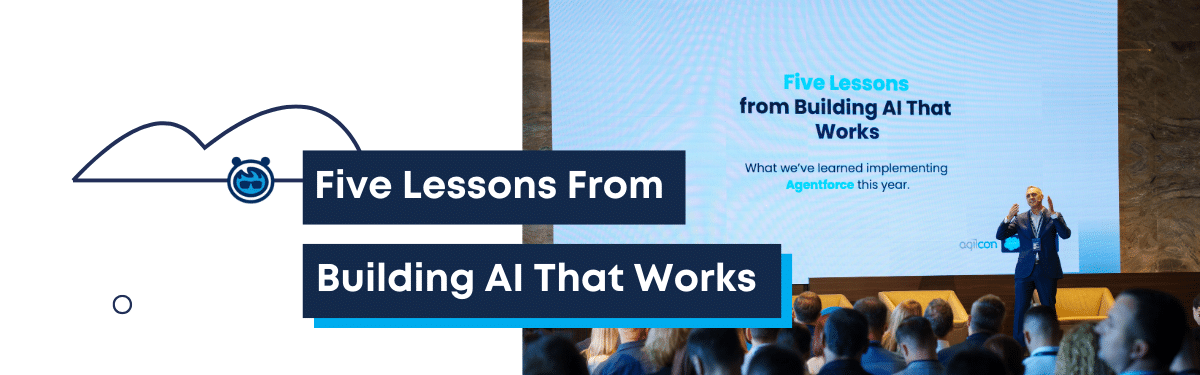
As Marko Perme, CEO of Agilcon Group, put it on the AdriatiCON stage:
“Build for what AI can do today, not for the hype version of tomorrow.”
The moment organisations started focusing on what AI can reliably deliver now, everything shifted. Projects moved out of the lab. Workflows became faster. Value became visible.
That mindset, clear, grounded, and practical, is exactly what will define who wins in 2026.
We saw firsthand what works, what doesn’t, and where AI actually creates measurable business after implementing Salesforce Agentforce across the region in 2025.
Here are the five lessons we’re taking forward into 2026.
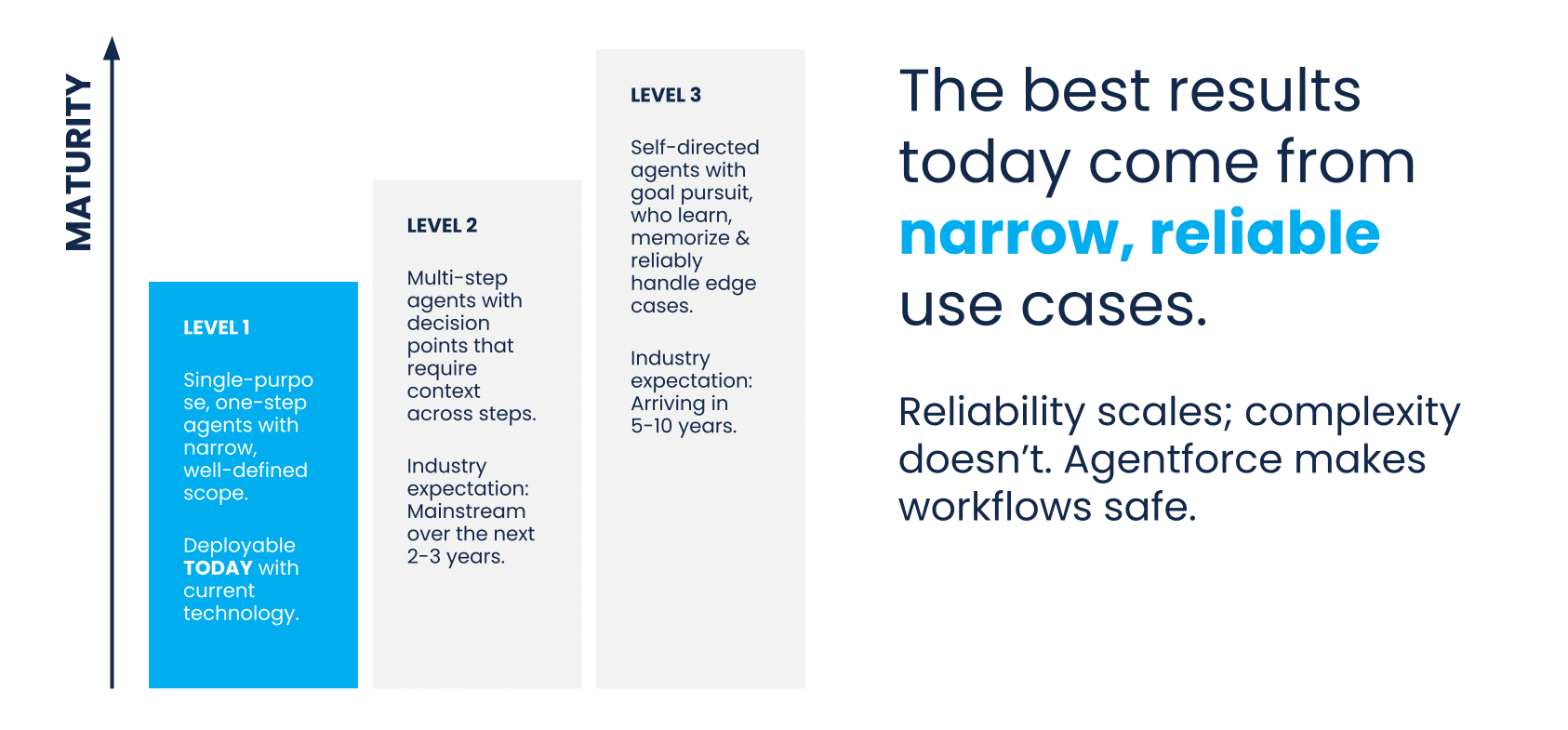
1. Reliability scales. Complexity doesn’t.
Every company “did AI” in 2025. Very few scaled it. Not from a lack of ambition, but from a lack of reliability.
The winners focused on narrow, predictable workflows where agents deliver consistent outcomes. Once reliability became the baseline, AI stopped being a gamble and started functioning like infrastructure.
Agentforce enables exactly that: a safe, structured way to start creating value with the AI we have today, and a foundation that will evolve as the models do.
2. Prompts didn’t deliver predictability. Architecture did.
2025 was full of prompt hacks and “just add more examples” optimism. But no prompt, no matter how clever, can carry enterprise accountability.
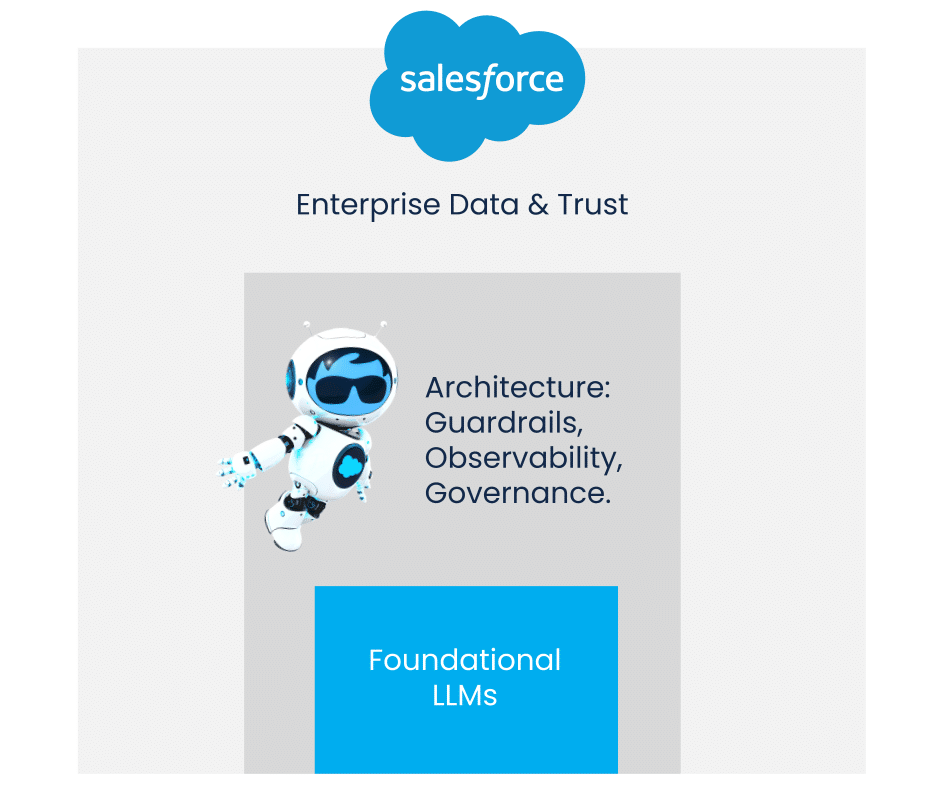
Predictability came from architecture: state, guardrails, observability, and governance.
These “boring but critical” elements turn a model into a system.
That’s exactly what Salesforce built with Agentforce: the enterprise framework that lets us turn models into trustworthy systems.
Book a free consultation and see how we can help you reach your goals.

3. AI that doesn’t pay, won’t stay.
The biggest implementation gap in 2025 wasn’t technical; it was organisational.
An agent is a micro-department: it needs an owner, KPIs, inputs, outputs, and a P&L.
“An AI agent isn’t just a feature you switch on. When companies treated agents like real parts of the organisation, with owners, accountability, and economics, they started delivering real value. Without that structure, they simply produced noise.”
Marko Perme, CEO of Agilcon Group
Teams that treated agents this way created durable value; others watched pilots die once costs hit reality. Economics was unforgiving. “AI that doesn’t pay, won’t stay.”
In 2026, this will only become more true.
And that’s exactly what Agentforce observability lets us do: track success, cost, and utilisation, so we know what to scale and what to stop.
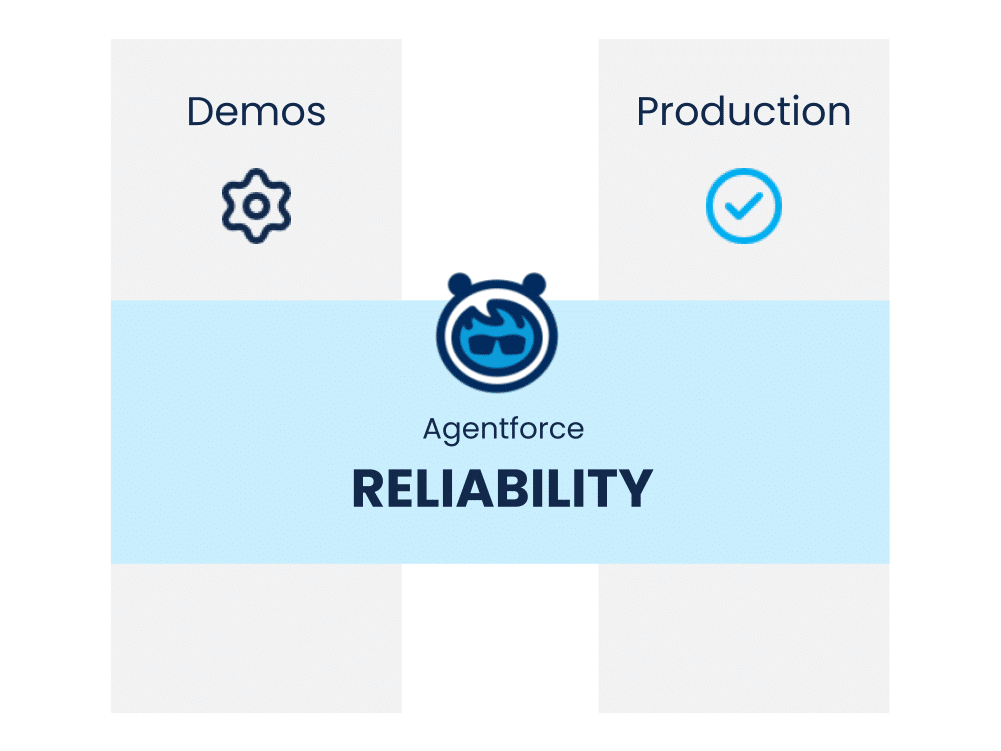
4. Pilots inspire. Production changes the business.
Everyone saw a perfect demo in 2025. But demos don’t face the real world. Production does.
The real world is messy: bad data, exceptions, compliance, multilingual customers, and integrations.
The winners were those who built for reality, not stage demos.
And that’s where Agentforce bridges the gap: making failure visible, recoverable, and manageable at scale.
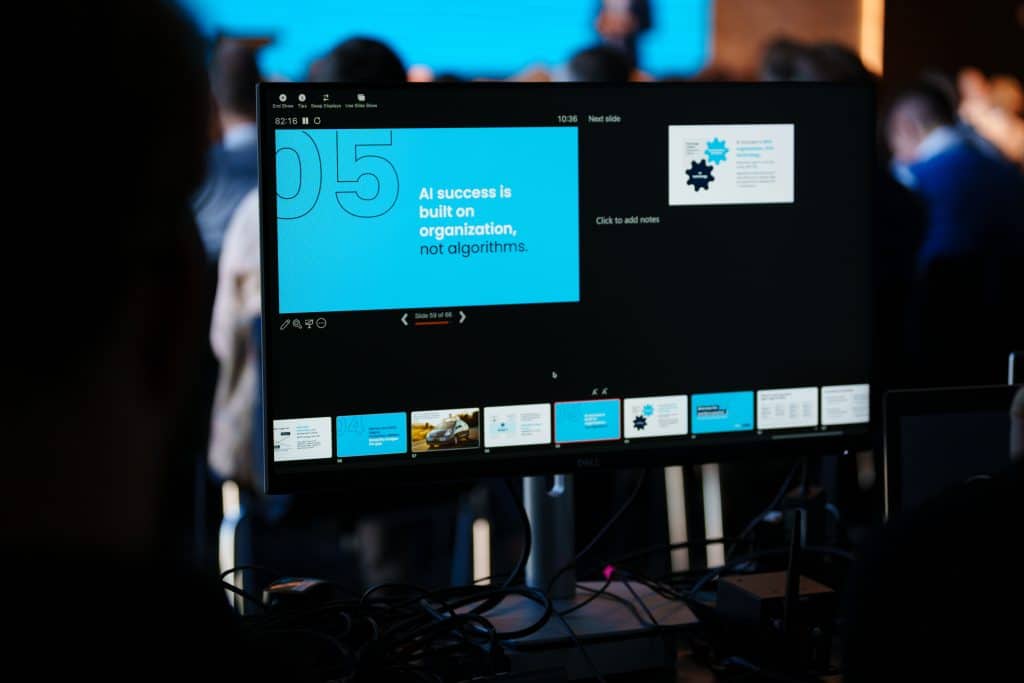
5. AI success is built on organisation, not algorithms
Most AI projects don’t fail because the model wasn’t good enough; they fail because the organisation wasn’t ready.No ownership, no process change, no feedback loop = no value.
Success starts with structure, not technology.
And this is also why Agentforce fits so well. It’s built inside Salesforce, where real business processes already live. It’s not an island of AI; it’s part of the organisation.
Start where ROI is immediate, and expand only from strength
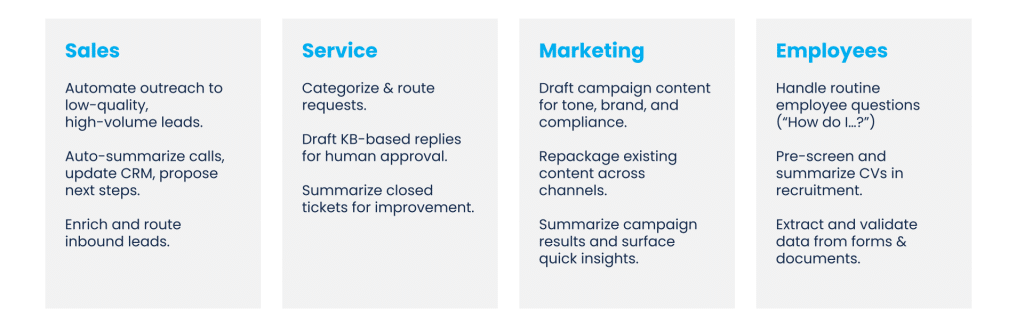
The most successful organisations in 2025 didn’t try to automate everything. They started where the economics were undeniable: high-volume, rule-based, boring but expensive workflows.
One example:
Automating outreach to low-quality, untouched leads, work no human prioritises, yet an agent can execute reliably and escalate when needed.
Fast ROI. Low risk. Clear measurement.
This same pattern held across service triage, documentation summarisation, and campaign QA.
Small, reversible wins created organisational confidence and opened the door to more advanced automation in 2026.
The rule is simple: focus 80% on reliable, Level-1, ROI-ready use cases, and reserve 20% for Level-2 experimentation.
What leaders should do in 2026
Here is the simplest, most reliable blueprint we can offer after a year of real deployments:
➡️ Choose one workflow that hurts.
If it’s boring, repetitive, and expensive — perfect.
➡️ Give the agent a real owner.
No owner = no outcome.
➡️ Design for reliability from day one.
Start small, measure ruthlessly, scale only what works.
Your KPI isn’t “cost per token”; it’s “cost per outcome.”
And if you want this done right, talk to us.
With years of Salesforce experience and a proven track record delivering enterprise-grade implementations, we know how to turn AI into real outcomes with Agentforce, the most enterprise-ready platform for building agents today.
Contact us
"*" indicates required fields